Broker Check


Roth Conversion Planning

A Roth conversion can add flexibility to your retirement income, but only when the timing and tax picture are right. We help Grand Strand families weigh whether a conversion fits their broader plan.

Request a Roth Conversion Consultation


30+ YearsAdvising Grand Strand families
Local OfficeServing Myrtle Beach and Horry County
Fiduciary AdviceAdvisory guidance in your interest
Coordinated PlanningIncome, tax, and legacy planning together

A Roth Conversion Is a Timing Decision

A Roth conversion lets you move assets from a traditional IRA or other pre-tax retirement account into a Roth IRA. You pay income tax on the amount you convert today in exchange for qualified withdrawals that are generally tax-free later. For individuals and families along the Grand Strand, the question is rarely whether a conversion is possible. It is whether it fits the retirement income picture you are building.

At Stonebridge Financial, we look at how a Roth conversion interacts with everything else in your plan: your expected tax bracket, your Social Security timing, your Medicare premiums, and the legacy you hope to leave. Sometimes a conversion makes sense. Sometimes waiting is the better move. We help you see the difference before you act.

Roth Conversion Considerations

Why Roth Conversion Planning Matters

A Roth conversion is largely a decision about when you pay taxes on retirement savings. The amount you convert, the year you do it, and the income surrounding the conversion can all affect the result.

The Planning Question

When Does Paying the Tax Make More Sense?

A lower-income year, the period between retirement and Social Security, or the years before required minimum distributions begin may create opportunities worth modeling. The point is not to convert simply because you can. It is to understand how the conversion fits with the rest of your retirement income and tax picture.

01

Required Minimum Distributions

Traditional IRAs generally require you to begin taking required minimum distributions at age 73, and those withdrawals are taxable. Converting earlier can reduce the balance subject to future RMDs. Roth IRAs have no RMDs during the original owner's lifetime.

IRS: Retirement Topics, RMDs
02

Tax Brackets Change

A lower-income year, early retirement before Social Security begins, or a move to South Carolina may create a period when your tax rate is lower than it could be later. That can make the timing of a conversion worth examining carefully.

Timing and taxable income matter
03

Social Security and Medicare

Converted amounts count as income in the year of the conversion. That can affect how Social Security is taxed and whether Medicare Part B and Part D premiums increase through IRMAA. Spreading conversions across multiple years can be part of that analysis.

Medicare.gov: IRMAA
04

Legacy and Heirs

Under current rules, most non-spouse beneficiaries must empty an inherited IRA within 10 years. Roth accounts can receive different tax treatment for beneficiaries, which is why conversion planning often overlaps with estate and legacy conversations.

IRS: SECURE Act guidance
Our Roth Conversion Services

How We Help with Roth Conversions

Roth conversion planning works best as part of a coordinated retirement income strategy, not as a one-time transaction. We look at the timing, tax implications, account rules, and your broader retirement goals before discussing a conversion.

01

Conversion Timing and Tax Modeling

We project how a conversion affects your taxable income this year and in the years ahead, so you can decide whether to convert now, wait, or convert in smaller amounts over time.

02

Partial and Multi-Year Conversions

A conversion does not have to happen all at once. We help you model a schedule of partial conversions, including how each amount may affect your target tax bracket over multiple years.

03

Backdoor Roth Considerations

For higher earners, a backdoor Roth may be an option. We review existing IRA balances, the pro-rata rule, and reporting details before anything moves.

04

Coordination with Your Wider Plan

Your conversion decision connects to rollovers and account structure. We coordinate it with your IRA planning and any 401(k) rollover you are weighing.

The Bigger Picture

One Part of a Broader Retirement Strategy

Roth conversion planning is one piece of a complete retirement strategy. Explore how it fits within our approach to retirement planning in Myrtle Beach.

Explore Retirement Planning

Why Grand Strand Families Work With Us

A Roth conversion has lasting tax consequences, so the advice behind it should be personal and unhurried. Stonebridge Financial is an independent, locally owned firm in Myrtle Beach, and we take the time to understand your full picture before recommending a move.

Our advisory recommendations are made in your best interest, with planning built around your goals rather than any single product.

  • Advisory Standard of Care

    In our advisory relationships, recommendations are made in your best interest, not driven by product sales.

  • Independent, With National Backing

    Securities and advisory services are offered through Osaic Wealth, Inc., Member FINRA/SIPC and a Registered Investment Advisor.

  • Rooted in Myrtle Beach

    We live and work on the Grand Strand, and we meet with clients face to face at our office on 48th Avenue North.

  • Coordinated, Tax-Aware Advice

    We weigh your conversion alongside income, Social Security, and legacy planning so the pieces work together.

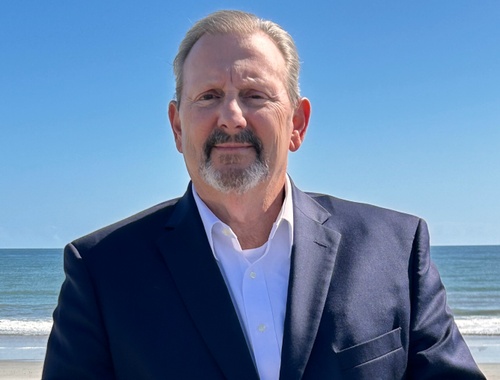
Dennie R. Lewis, CLU, ChFC, CASL

Dennie R. Lewis, CLU®, ChFC®, CASL®

Owner & Financial Advisor

An independent advisor and the founder of Stonebridge Financial Group, Dennie holds the Chartered Life Underwriter, Chartered Financial Consultant, and Chartered Advisor for Senior Living designations from The American College of Financial Services, with more than three decades in the financial services industry.

Dawn Lewis

Dawn Lewis

Stonebridge Financial Group

Dawn is part of the Stonebridge Financial team in Myrtle Beach, helping clients connect with the firm and stay supported throughout the planning relationship.


Areas We Serve

Stonebridge Financial works with individuals and families across the Grand Strand from our office in Myrtle Beach, SC. We regularly help clients in:

  • Myrtle Beach
  • North Myrtle Beach
  • Surfside Beach
  • Conway
  • Carolina Forest
  • Socastee
  • Little River
  • Murrells Inlet

We also work with clients across the country through secure video meetings, so you can plan with us whether you are down the street or out of state.

1200 48th Avenue North, Suite 202
Myrtle Beach, SC 29577
843-839-3836

Let's Build a Plan That Fits Your Life on the Grand Strand

If you want clear, coordinated guidance from an advisor who knows Myrtle Beach, we would welcome a conversation. There is no pressure, just a chance to talk through where you are and what you want next.

Prefer to talk now? Call 843-839-3836

Ready when you are.

Request a Consultation

We serve clients throughout South Carolina and North Carolina, in person and by secure video.

Frequently Asked Questions

What does a financial advisor in Myrtle Beach do?

A financial advisor helps you plan for the goals that matter most, such as retirement income, investing, taxes, and passing on what you have built. At Stonebridge Financial Group, we coordinate these areas into one plan and meet with you regularly to keep it on track as your life and the markets change.

Do you only work with clients in Myrtle Beach?

Our office is in Myrtle Beach and we serve families throughout the Grand Strand and Horry County. We work with clients who reside in South Carolina and North Carolina, and we meet both in person and by secure video for clients across the country who prefer to connect remotely.

What makes Stonebridge an independent firm?

Being independent means we are not limited to one company's products. Our recommendations start with your goals, and we have access to a broad range of options to help you reach them. Securities and advisory services are offered through Osaic Wealth, Inc., Member FINRA/SIPC, and a Registered Investment Adviser.

When should I meet with a financial advisor?

Common moments are nearing retirement, changing jobs, receiving an inheritance, or simply wanting a clearer plan for what you have saved. There is no minimum life stage to start. A first conversation helps you understand where you stand and whether our approach is a good fit for you.

How do I get started with Stonebridge Financial?

You can request a consultation through our contact page or call our Myrtle Beach office at 843-839-3836. We will set up a time to learn about your situation, answer your questions, and outline how we can help. There is no obligation to move forward after that first conversation.


A Roth conversion can be a useful planning tool. But only when it’s done with context, timing, and taxes in mind. For individuals and families in Myrtle Beach, SC and nearby coastal communities, Roth conversion planning is often less about chasing tax trends and more about creating flexibility in retirement income.

At Stonebridge Financial, we help clients understand how a Roth IRA conversion fits into their broader financial picture. Sometimes it makes sense. Sometimes it doesn’t. And sometimes the best move is simply waiting. Contact us today to explore your options.

Contact Us
What Is a Roth Conversion?

What Is a Roth Conversion?

A Roth conversion allows you to move assets from a traditional IRA or other pre-tax retirement account into a Roth IRA. The converted amount is generally taxed as ordinary income in the year of the conversion. In exchange, qualified Roth withdrawals later in retirement are typically tax-free. You’re essentially choosing when to pay taxes. Now, or later.

A Roth IRA conversion doesn’t have to happen all at once. Many people choose to convert smaller amounts over multiple years to manage the tax impact more deliberately.

Why People in Myrtle Beach Explore Roth Conversions

Roth conversions often come up during life transitions. Retirement. Relocation. A lower-income year. For Myrtle Beach residents, especially retirees or those nearing retirement, Roth planning can help support income flexibility down the road.

You may consider exploring a Roth conversion if:

  • You expect your tax rate to be higher later in retirement
  • Required minimum distributions may push you into a higher bracket
  • You want more control over taxable income in retirement
  • You’re planning around Social Security and Medicare premiums
  • You’re thinking about legacy planning for heirs

But none of these factors stand alone. The full picture always matters.

Regular vs Roth IRA. Understanding the Tradeoffs

The difference between regular vs Roth IRA treatment is foundational to Roth conversion decisions.

Traditional IRAs

Traditional IRAs grow tax-deferred, but withdrawals are generally taxable and required minimum distributions apply later in life.

Roth IRAs

Roth IRAs are funded with after-tax dollars. Qualified withdrawals are tax-free, and there are no required minimum distributions for the original account owner.

Different tax treatment. Different planning flexibility. Neither is inherently better in every situation.

Backdoor Roth Conversion Considerations

For higher-income earners, Roth contributions may feel out of reach. That’s where a backdoor Roth conversion sometimes enters the conversation.

A backdoor Roth IRA conversion typically involves making a non-deductible contribution to a traditional IRA and then converting those funds to a Roth IRA. While the concept is straightforward, the execution is not always simple.

Existing IRA balances, pro-rata rules, and tax reporting details all matter. A backdoor Roth conversion should always be reviewed carefully before moving forward.

Planning Locally in Myrtle Beach


Tax planning isn’t abstract. It’s personal. And it’s local.

Working with a financial planner who understands the Myrtle Beach area means factoring in state taxes, retirement migration patterns, and income dynamics common along the Grand Strand. Those local details often shape how and when a Roth conversion makes sense.

Frequently Asked questions

Is a Roth conversion taxable?
Yes. The amount converted from a traditional IRA is generally taxed as ordinary income in the year of conversion.

Can I convert only part of my IRA?
Yes. Partial Roth IRA conversions over multiple years are common and often used to manage tax impact.

What is a backdoor Roth IRA conversion?
It’s a strategy that may allow higher-income earners to access Roth benefits using after-tax IRA contributions. Existing IRA balances can affect the outcome.

Do Roth IRAs have required minimum distributions?
Roth IRAs do not require distributions during the original owner’s lifetime.

Is a Roth conversion right for everyone?
No. Roth conversions depend on income, timing, and tax considerations. Personalized planning is essential.

Start the Conversation

Start the Conversation

A Roth conversion isn’t about doing more. It’s about doing what fits.

If you’re considering a Roth IRA conversion or want to understand whether it belongs in your retirement strategy, Stonebridge Financial is here to help Myrtle Beach residents explore their options thoughtfully.

Reach out to start a conversation and take a closer look at how Roth conversion planning may fit into your overall financial picture.